
WATERSIDE GARDEN
A popular spot for weddings, gatherings, and picnics this garden may seem like just a picturesque view of our pond fountain. However, this critical infrastructure is a naturally occuring wetland that protects a vast area of the Arboretum. Whether storing thousands of gallons of water during drought, preventing soil erosion during heavy rain, or filtering runoff and pollution before reaching waterways, this garden is extremely important.
Named for the fact that this garden sits alongside one of the Arboretum’s permanent ponds, the topography is low and soil type indicative of a long history of water storage. This area may at one time been a prairie or woodland pothole, an incredibly important ecosystem for Iowa’s native wildlife and water cycle. Aerial imaging from the United States Geological Survey and original parcel surveys show that this wetland (along with the Palustrine Wetland) are native to the site. This particular wetland has been deepened to store additional water and to be more aesthetically pleasing as a water feature.

Heavy Rainfall Relief
Once upon a time, torrential downpours and extreme rain events were few and far between. These storms were often coined as 10 year, 20 year, 50 year or 100 year storms. However in recent decades these storms are becoming more frequent and hitting with a harder intensity. The Waterside Garden is a demonstration of one of the land management techniques that can be used to provide relief from heavy rainfall.
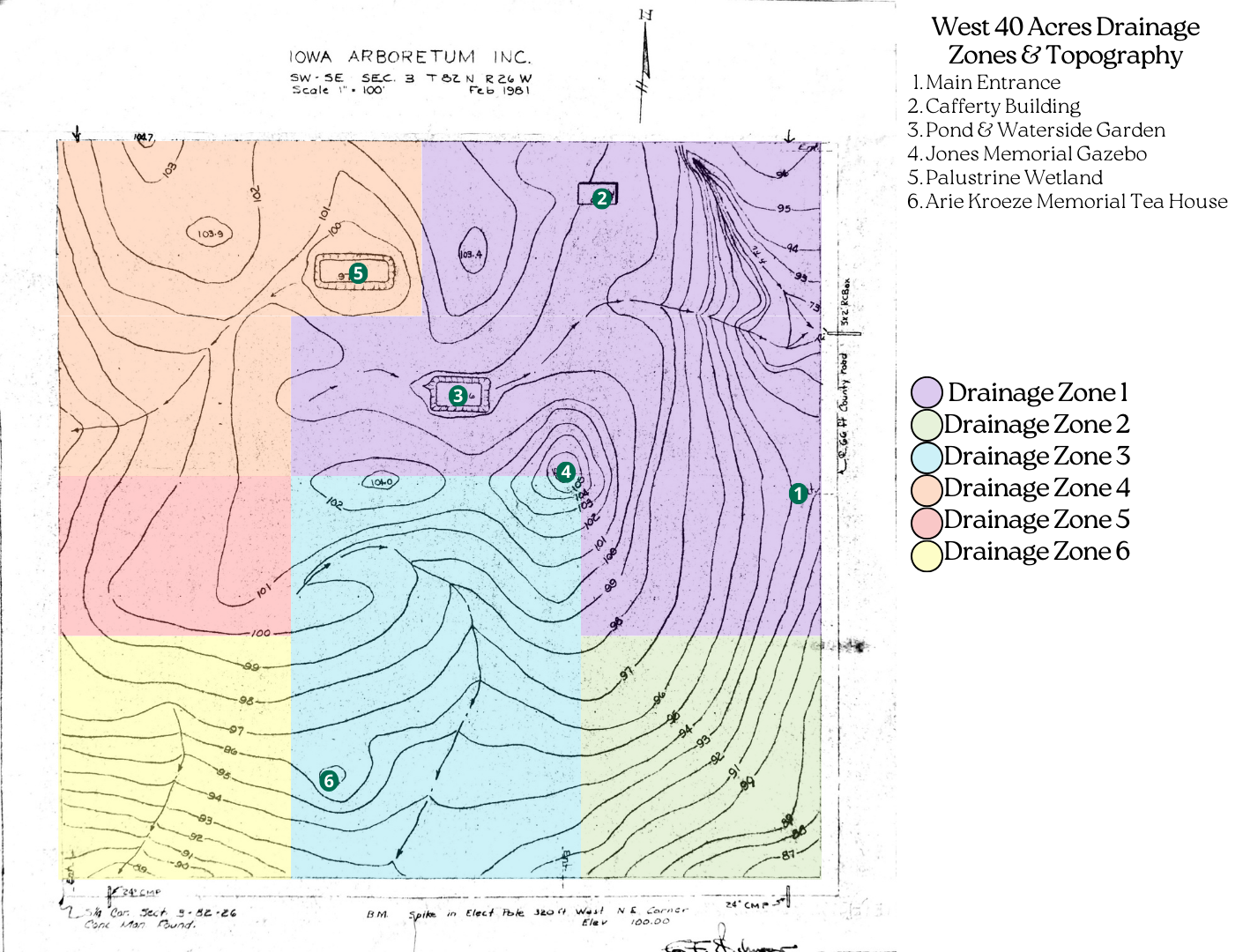
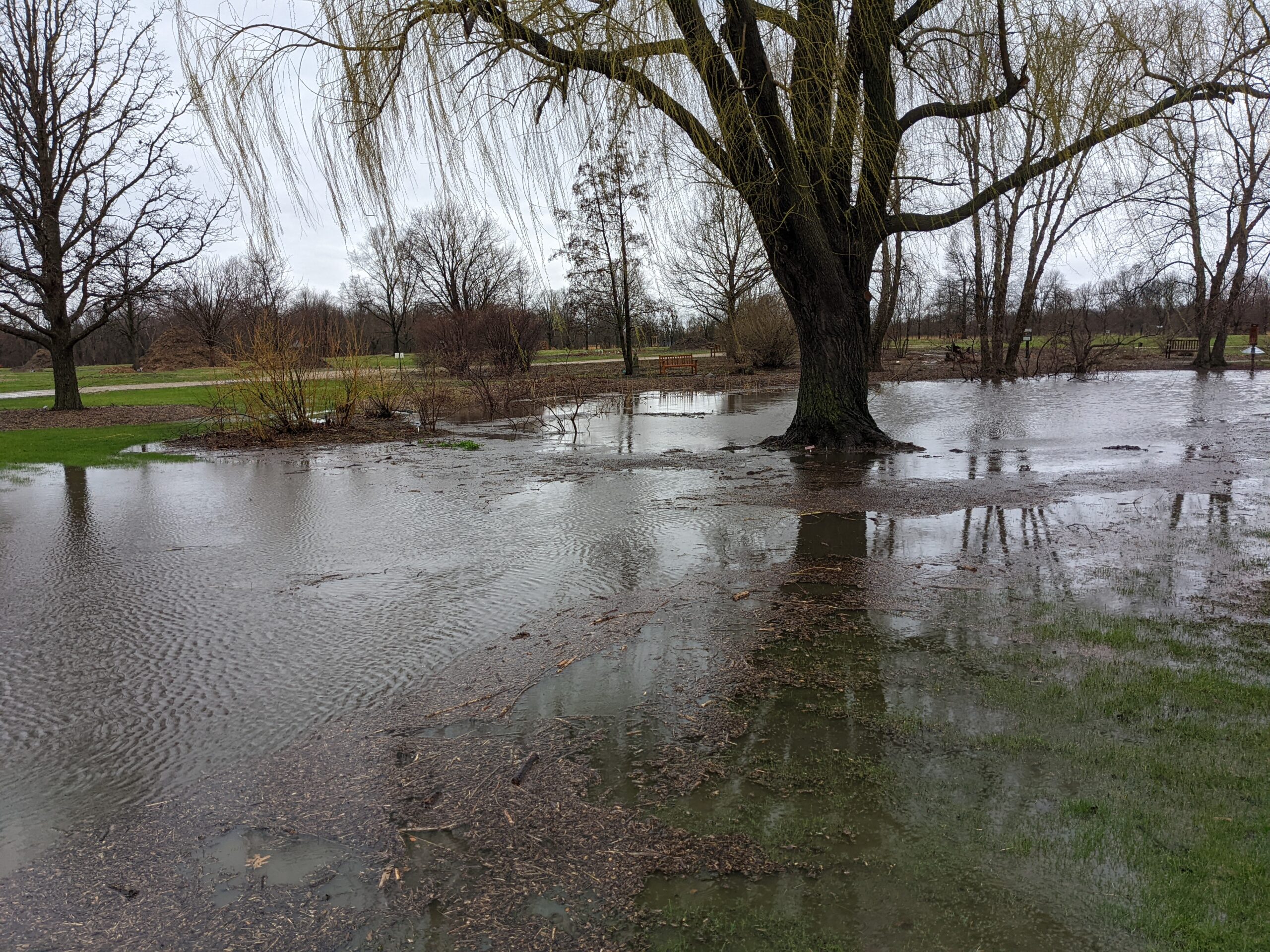
The pond in the Waterside Garden receives the runoff from many acres of the Arboretum’s grounds. As a part of the largest drainage zone (purple on the map), this water feature is responsible for catching, holding, and slowly releasing water after a storm. Depending on how much rain and how quickly it falls, the pond can overflow its banks into the surrounding garden, sometimes doubling the footprint of the pond. This water is then slowly able to move downstream, preventing erosion from fast moving water. Then, when the surrounding land begins to dry over the following weeks, the excess water can percolate and spread to areas in need of moisture. The control of too much water and then subsequent distribution during water scarsity is a big asset and helpful for keeping trees and other plants healthy. The Arboretum also doesn’t lose much soil or organic matter from fast flowing water eroding it away.
The ability for this wetland to hold water back even temporarily also helps areas downstream from becoming overwhelmed. The Waterside Garden is #3 on the map above, so water still has plenty of ground to cover before it leaves the property. This drainage zone is over 13 acres, which in a one inch rainstorm receives 350,000 gallons of water! That much water could prove a disaster without the help of our permanent and impermanent wetlands.
Runoff Rescue
The Waterside Garden is positioned perfectly to be a runoff sponge. One of the purposes of this garden is that as rain water picks up, washes off, or dissolves any type of polution, it can be trapped and absorbed by this garden. This happens either by plants uptaking the chemicals into their tissues (fertilizers, minerals, some pesticides) or the pollutants precipitating or bonding with organic matter into the sediment at the bottom of the wetland. Prefiltered water flowing through the Prairie Strip, Orchard and Herb Garden, and other surrounding gardens compounds the effect. By the time the water may reach a nearby waterway, our hope is that any manmade chemical is removed naturally.
Turtle Highway
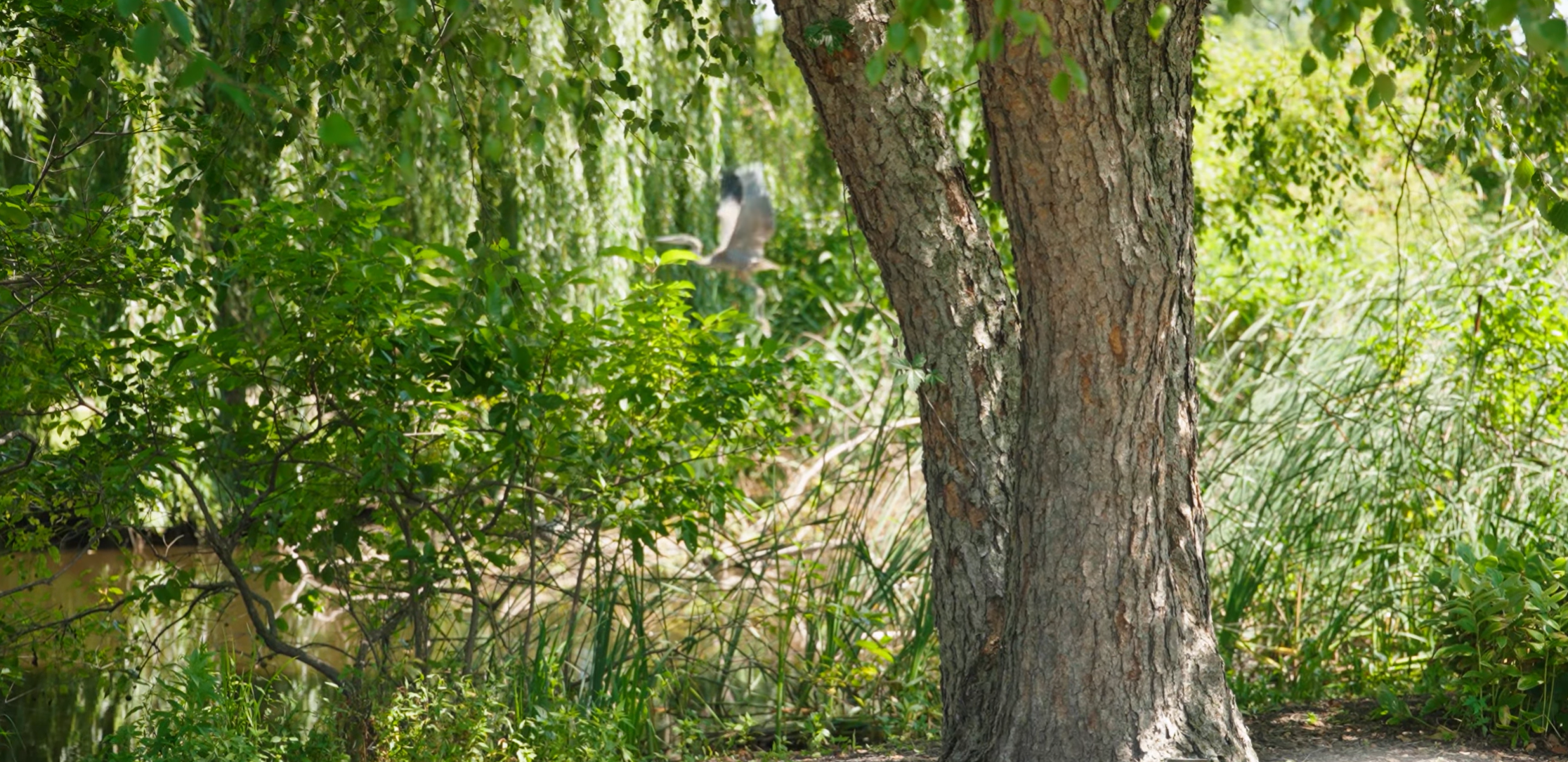
As you can imagine, an open body of water with considerable depth and surrounding vegetation makes good habitat for all sorts of critters. Add in the nearby Palustrine Wetland and low lying areas in-between, this section of the Arboretum is a turtle highway! It is not uncommon to spot snapping turtles (Chelydra serpentina), painted turtles (Chrysemys picta), and softshell turtles (Apalone spp.) in this garden or nearby. You might also spot various snakes, including garter snakes (Thamnophis spp.). Finally, this is one of the best spots to see frogs and toads of anywhere at the Arboretum. Various birds love visiting this spot to rest or get a drink, and many mammals small or large visit frequently.
Back to Our Plants hompage