
WALNUT TRAIL
Summer Sanctuary
This 3/4 of a mile loop is a quiet refuge where viewing wildlife and wildflowers is easy. Mostly on uplands, this trail is easily hiked and relatively flat. Total distance traveled to/from the parking lot on this loop is 1.25 miles.
Many of the trees in this woodland are less than 50 years old and are densely spaced. Most of the trail is in deep shade. Ravine slopes are blanketed in wildflowers, while the interior of the uplands is mostly sedge understory.
Lessons in Land Use
Iowa’s land has undergone many drastic changes in the last 150 years. Observing and understanding what those land changes influence ecologically is important for making good decisions about management of natural resources. Here at the Arboretum, historical aerial photographs are often used for developing and making long-term management decisions about natural resource spaces. In the case of Walnut Trail, occupying the furthest east portion of the Arboretum’s grounds, the land use history and rate of reforestation paint a pretty clear picture of the state of the woodland today. In the 1840’s, this land was surveyed as being dominated by centuries old hickories and oaks and managed by regular low-intesity burns. However, by the 1870’s much of the upland had been converted to cropland and the steep topography was being eyed for timber harvest. Until 1950, logging, cattle grazing, and farming were incredible forces of disturbance on the land. Subsequent laissez-faire management of the woody plant succession in the disturbed soil aided an abundance and claustrophobic density of early successional species.
Depicted below are aerial photographs taken by the United States military in conjunction with the United States Geological Survey. In the photographs you can see the original 40 acres of the Iowa Arboretum and Gardens were still woodlands until the 1960’s (rare for Central Iowa) meanwhile the surrounding land had been converted from woodland to prairie or farmland. Sparse canopy in the woodlands indicate significant timber harvest, likely in the 1910’s-1920’s.
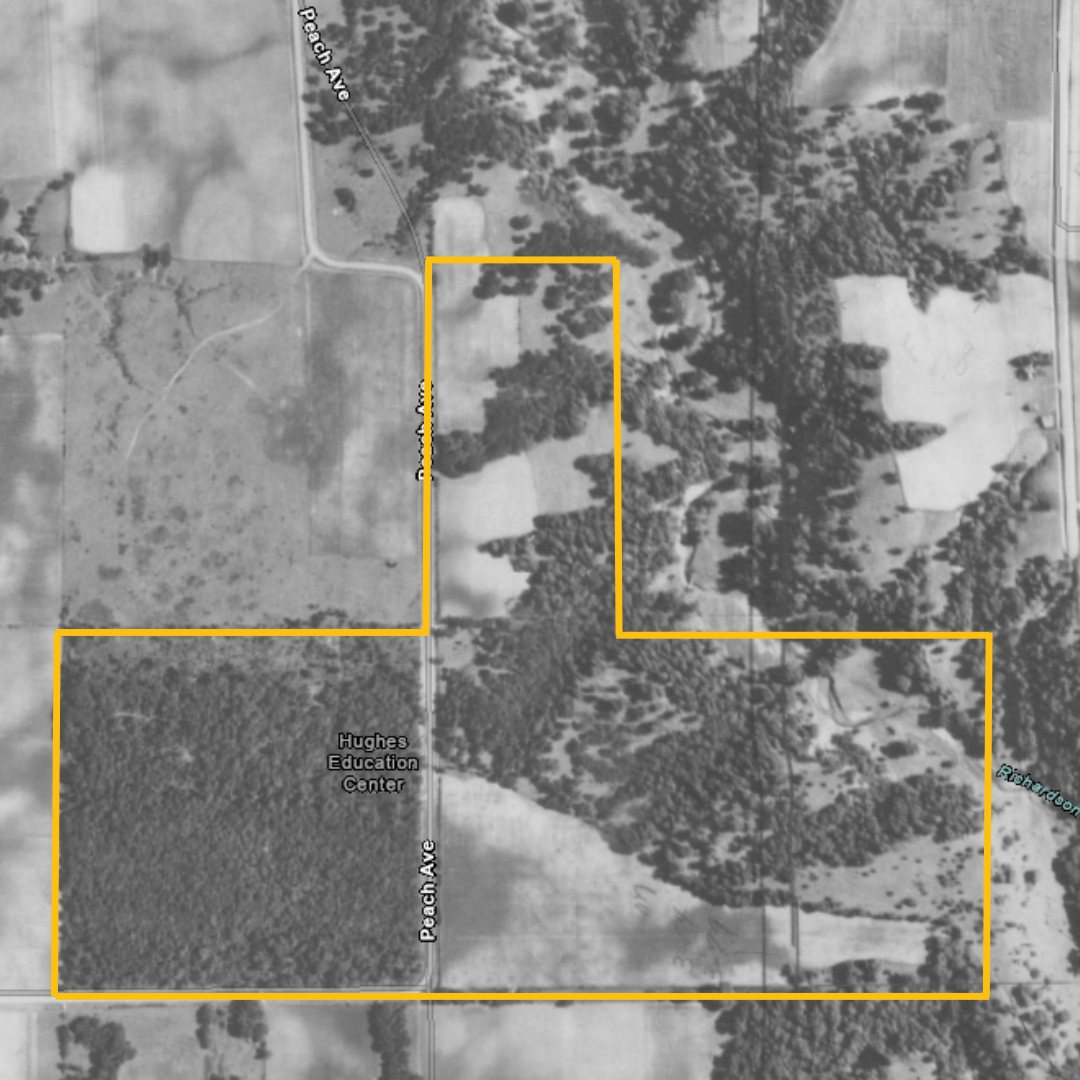
1930’s
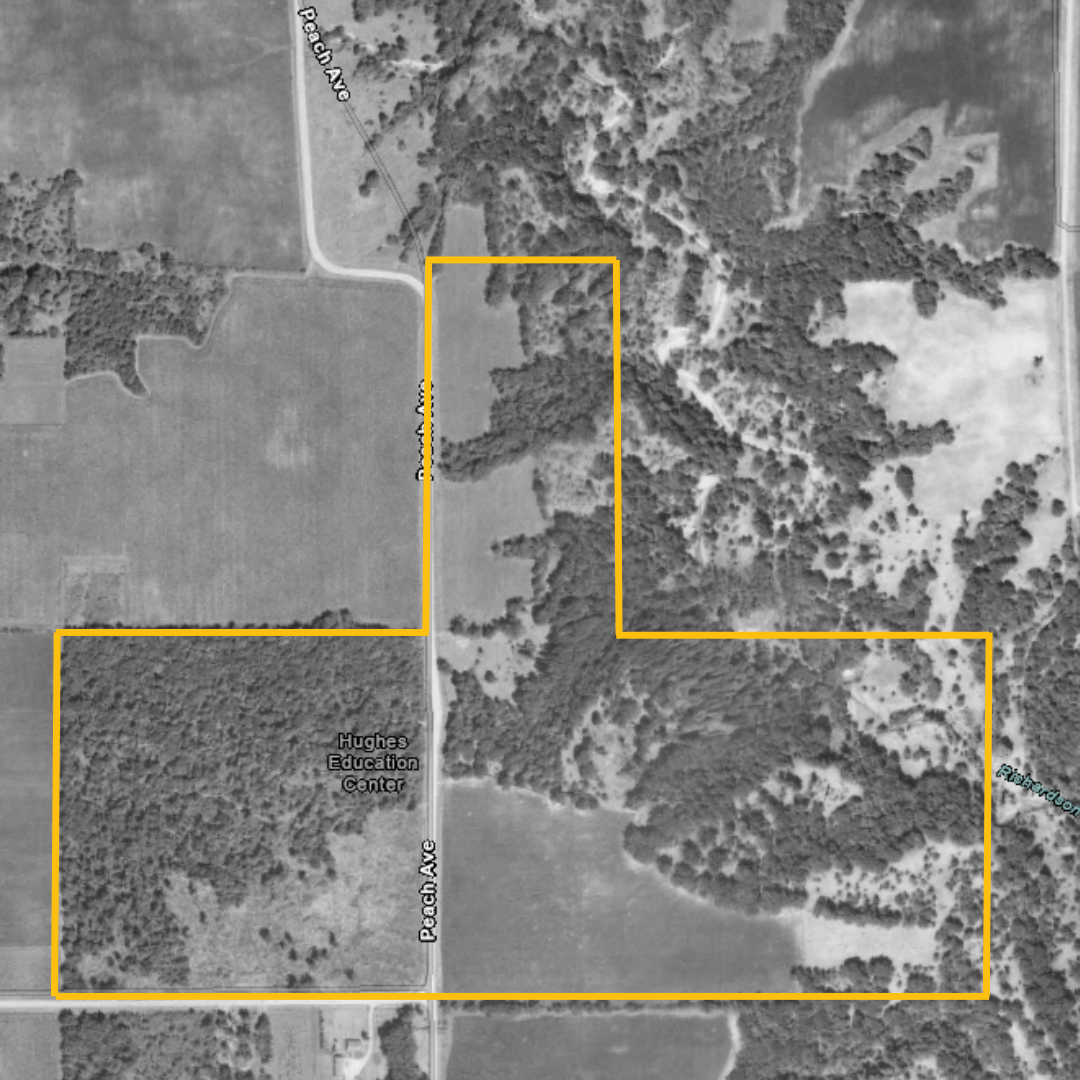
1960’s
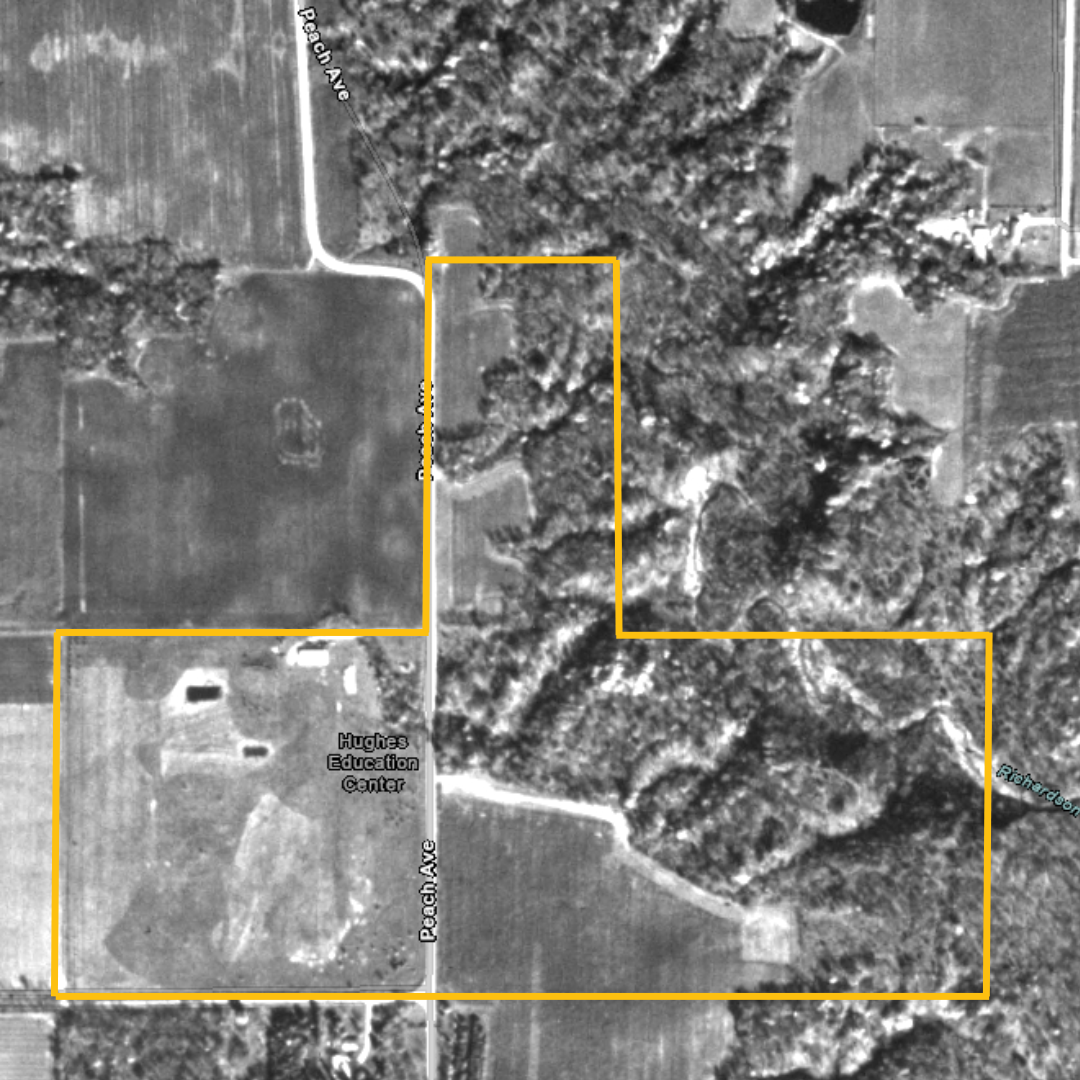
1980’s
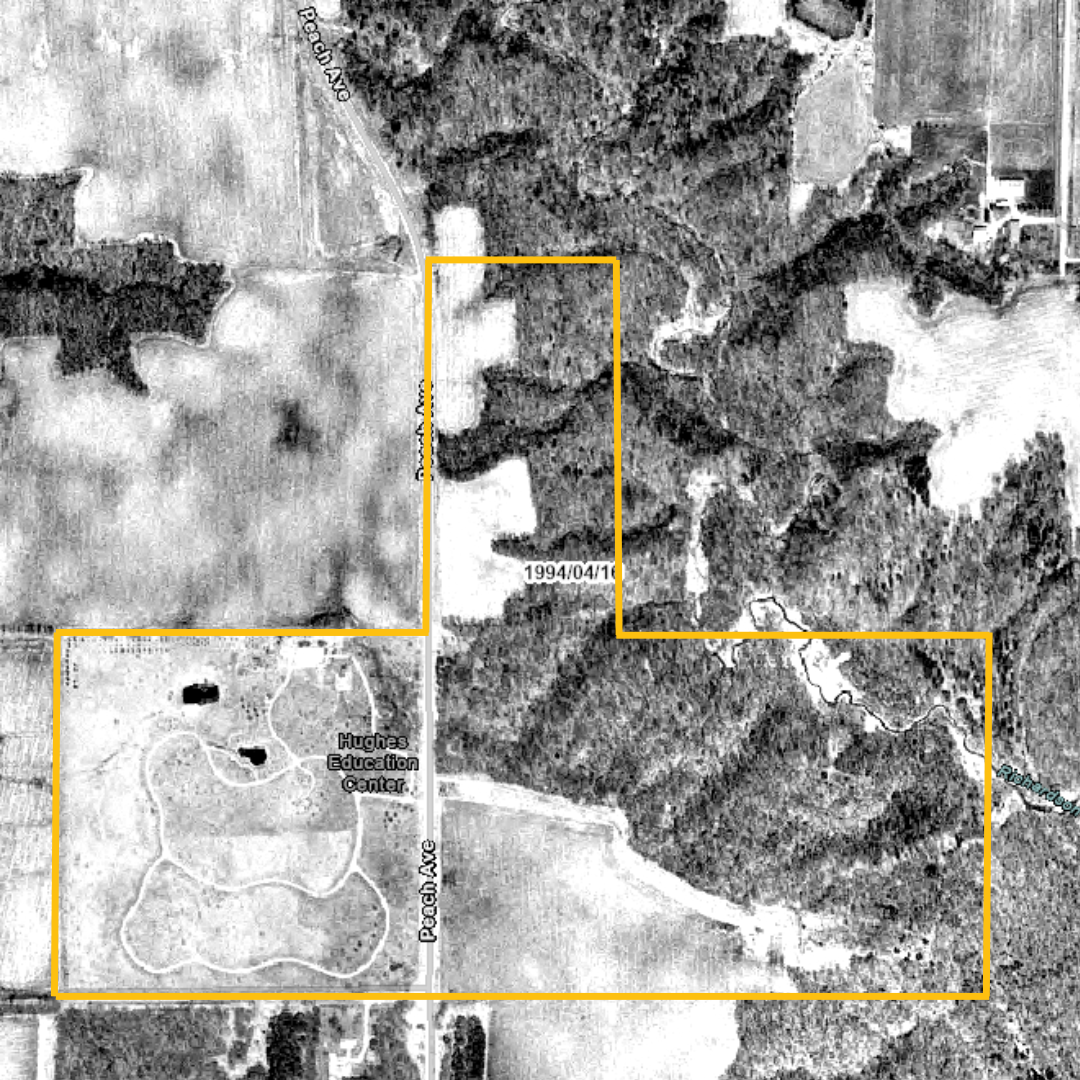
1994
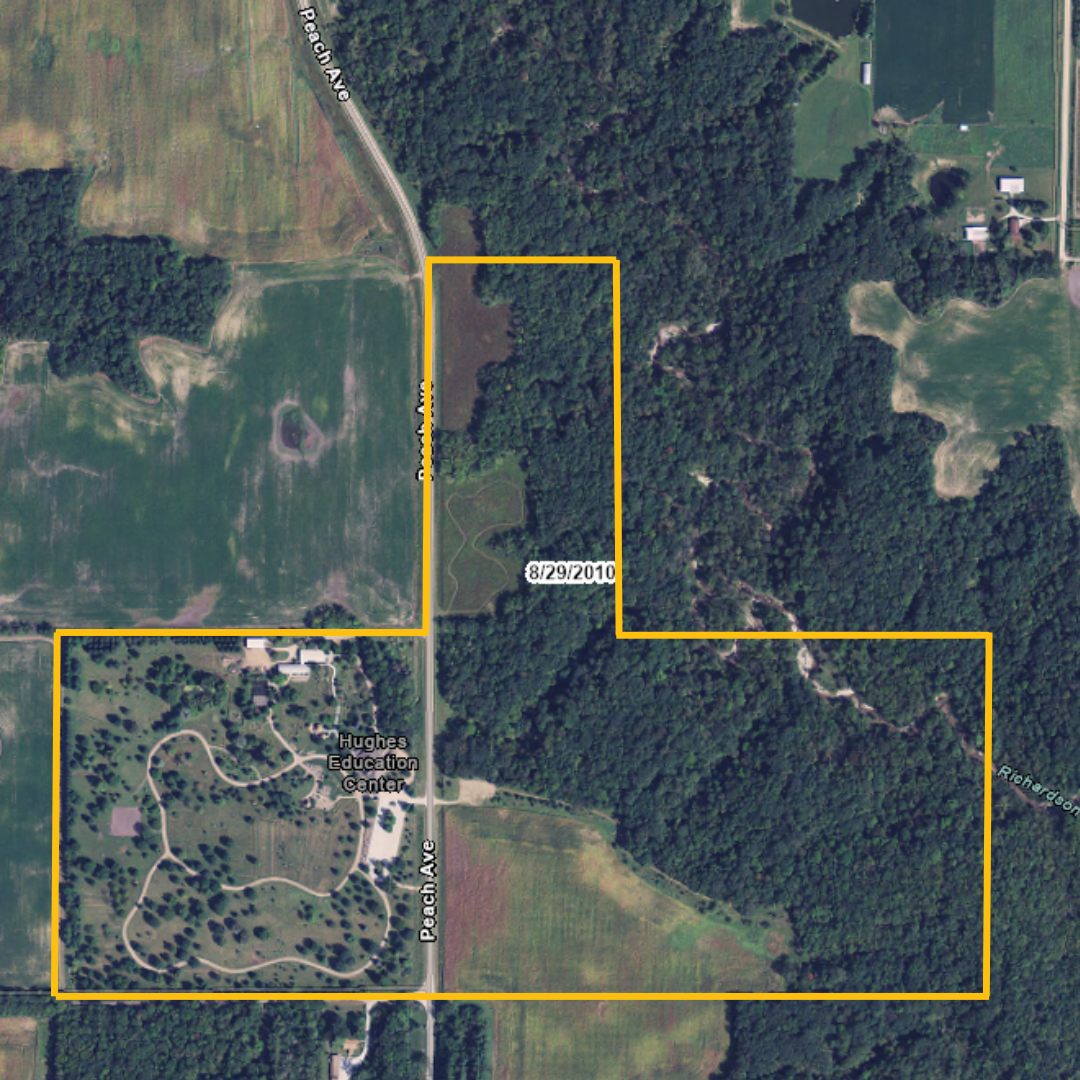
2010
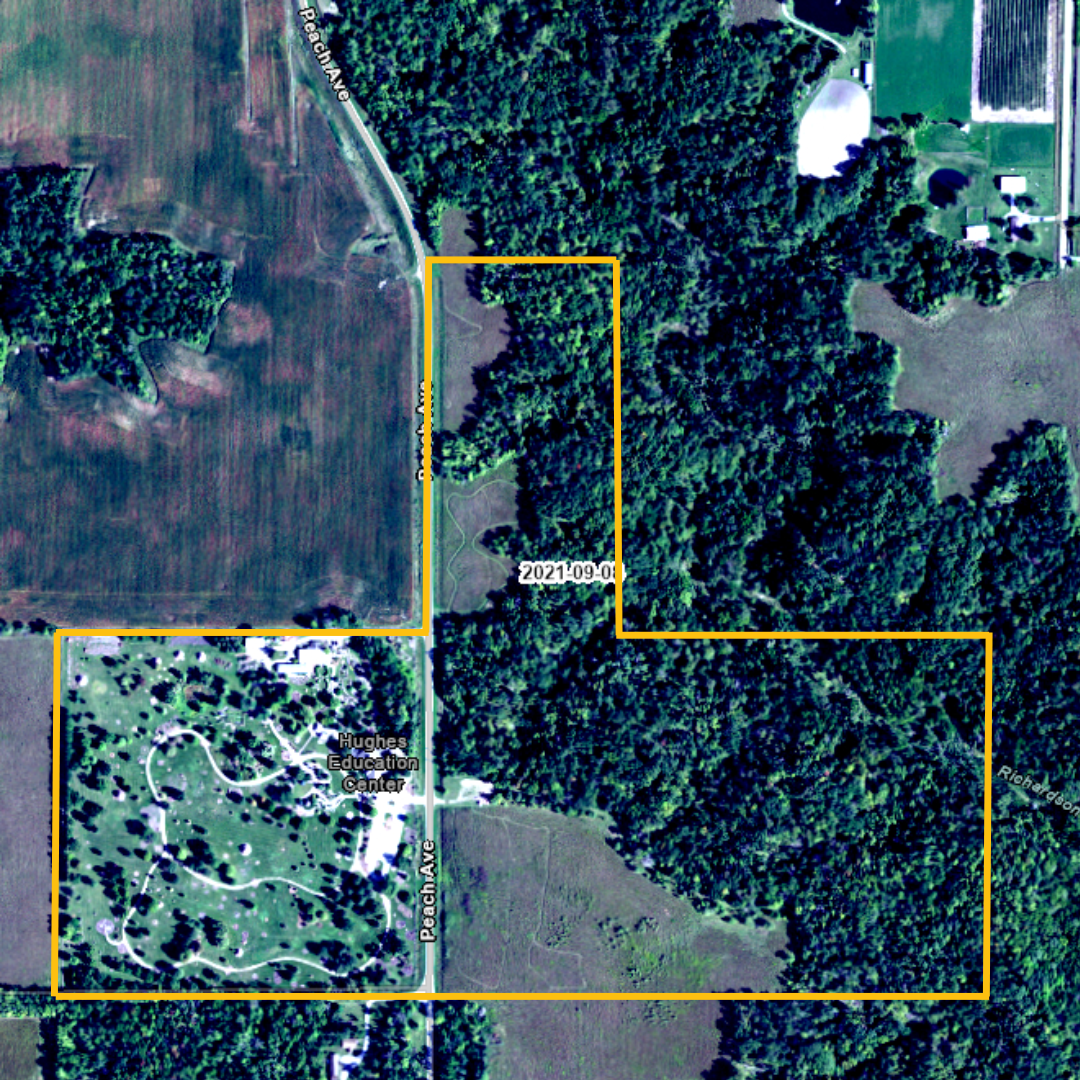
2021
By the late 1960’s when the Arboretum was established, the uplands were being colonized by dense stands of fast growing, weak wooded species like linden (Tilia), ash (Fraxinus), elm (Ulmus), and redcedar (Juniperus). Later disturbances like an attempt to build an equipment access point in the 1980’s-90’s left the understory ripe for invasive plant encroachment.
In the 2010’s, the canopy was nearly 100% closed with these young, fast growing tree species. However, Dutch Elm Disease began infecting the maturing elms and Emerald Ash Borer eliminated any standing mature ash trees. Then the 2020 derecho knocked down an additional 30-40% of the total canopy.
Today this woodland is on track to resembling what it would have looked like before these human distrubance activities. The elimination of some of the canopy via disease and weather events have left openings for oak and hickory seedlings to re-establish. Trees that survived logging and farming produce enough acorns and hickory nuts to colonize deep into the disturbed woods. The understory is a carpet of invasive species in some places, but low disturbance methods of removal have proven successful at managing it. You won’t find any great diversity of remnant species in these woods, but it is a good demonstration of what can grow 50-60 years after cessation of intense disturbance activity. We’ll keep moving forward with our management goals, just knowing we are working with a distinctly Anthropocene woodland!
General Land History
Up until the late 1870’s, most of the Arboretum’s land was upland woodlands. Territory Survey Records from 1847 indicate that the dominating ecosystem for this region was oak-hickory woodland with old growth trees being dated centuries old. An upland surrounded on three sides by water and steep ravines/cliffs, this area was protected from high intensity and frequent burns unlike the prairie uplands nearby. This area would have experienced infrequent low intensity burns generally started by indigenous peoples living in or traveling through the region.
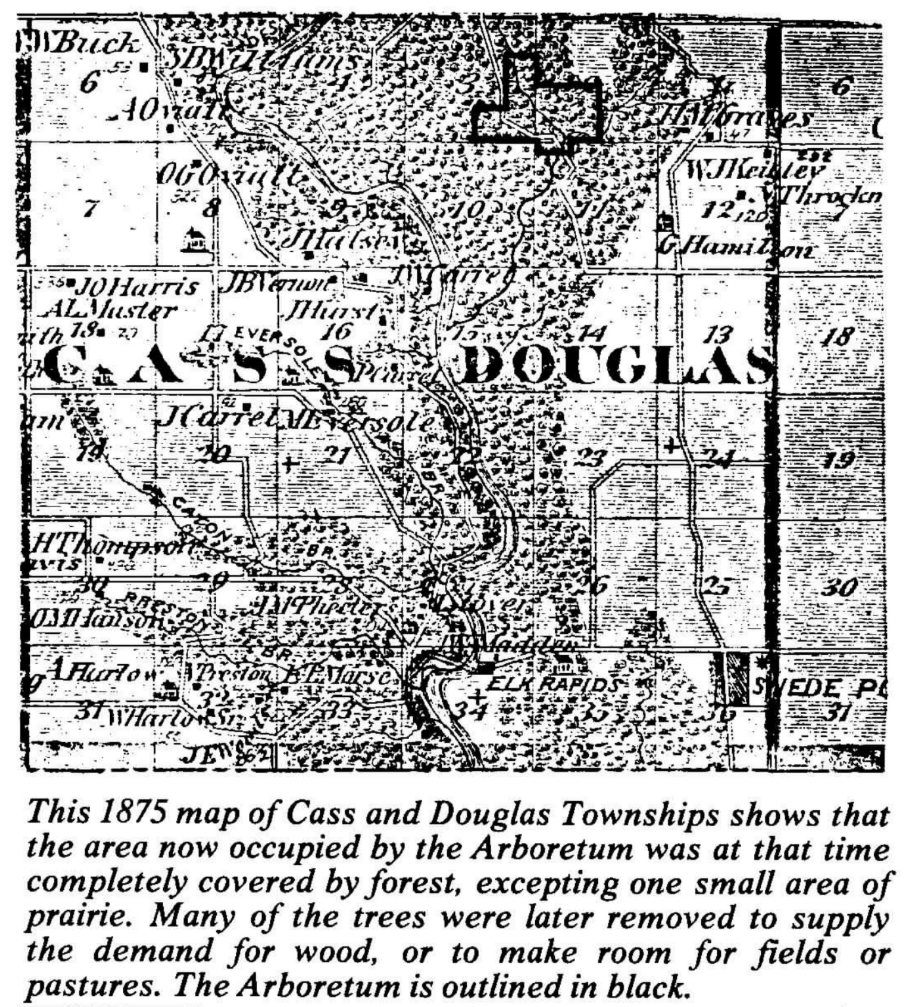
However, during settlement of Central Iowa from the 1850’s to 1870’s much of this woodland was logged for timber and to make room for row crop agriculture and fire was suppressed.
The land was farmed and grazed by private land holders until 1950 when it was purchased by the Iowa 4-H Foundation as part of a 1,000 acre land acquisition for the establishment of the Clover Woods Camp & Retreat Center. The Iowa 4-H Foundation continued to farm the land or rent it for farming for several decades. For a total of over 100 years, the land where Walnut Trail is today was cultivated.
In 1969, one year after being established, the Arboretum began a 99 year lease of the land from the Iowa 4-H Foundation. The Iowa Arboretum took over management of 300 acres of woodlands and the establishment of trails systems. Eventually in 2018 the Arboretum purchased 80 acres from the Iowa 4-H Foundation including this trail loop.
Back to Our Plants hompage
Back to Natural Resources hompage